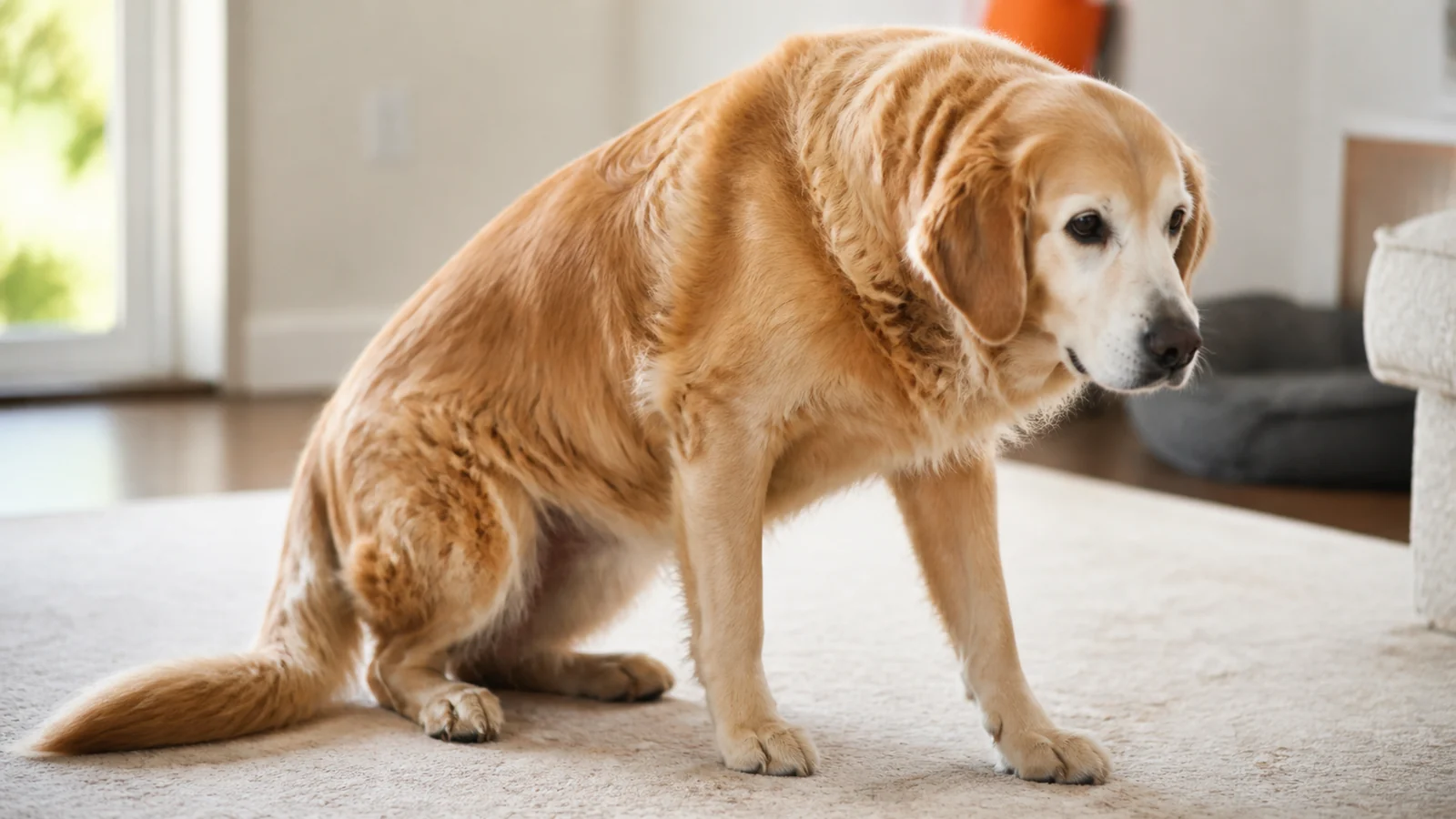
The easiest place to start with mobility aids is not a product at all but the floor: rugs and runners over slick tile and hardwood do more for your stiff senior dog or cat than most gear you can buy. Next come ramps, raised bowls, and a litter box with a low side, then toe grips for traction, and later a support harness or a cart if your pet's back legs slowly weaken. Arthritis, the most common cause, usually holds steady for years with good pain control and weight management, which turns traction aids and a well-fitted harness into long-term equipment worth choosing carefully. Make the changes gradually, because your pet will push back if everything shifts at once when they are already sore. Doing this early matters, since stiffness at this age is usually arthritis, which is treatable rather than inevitable.
Countryside Veterinary Hospital in Toney treats a lot of stiff, slowing senior pets, and we examine the whole animal rather than only the leg that hurts. A nose-to-tail senior wellness exam and in-house digital X-rays can show us which condition we are dealing with, and our orthopedic and chiropractic care with pain management mean we can often treat the cause itself, not just fit a device around it. If your dog is slower to rise or your cat has quietly stopped jumping to the windowsill, request an appointment and we will help you match the right aid to the path your pet is actually on.
The Most Important Things to Know About Assistive Devices
- Slowing down in a senior dog or cat is usually a treatable condition, most often arthritis, rather than a verdict about age.
- The right aid depends on the stage: traction and home changes early, a support harness in the middle, a cart when the rear legs stop holding weight.
- Putting a name on the underlying condition, arthritis, disc trouble, or nerve disease, is what tells us how the support plan will shift over the coming year.
- A device works best next to pain control, weight management, and strengthening work, which do the heavy lifting no product can.
What Happens at the Exam When a Senior Pet Starts to Slow Down?
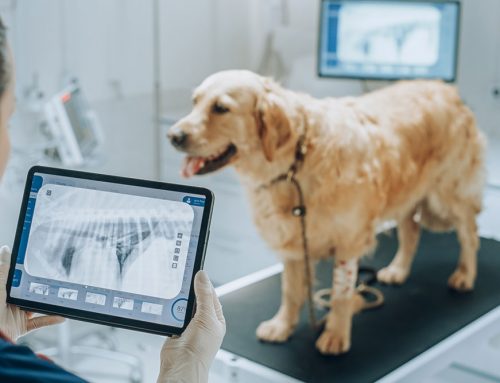
The visit starts with watching your pet walk, then a hands-on check of every joint, the spine, and how the back feet land. In-house digital X-rays and bloodwork usually follow, because the goal is to name the condition behind the change before anyone starts shopping for equipment.
Plenty of people book that appointment apologizing for making a fuss about "just getting old." It's the right call. The stiffness most families write off as age is usually osteoarthritis in dogs and cats, a manageable disease rather than an unavoidable part of getting older.
What we're sorting out is whether the trouble is orthopedic, meaning joints and ligaments, or neurologic, meaning the nerve signals that tell a foot where to land. A dog sore in both hips moves very differently from one whose back paws fold over without them noticing. Our X-rays show the joints and spine while you're here, and our in-house lab runs the bloodwork that tells us which medications are safe for your pet's kidneys and liver. Catching the shift early is a big part of why a baseline wellness exam carries more weight in the senior years, when six months can change quite a lot.
Which Aid Does My Pet Actually Need Right Now?
Match the aid to the stage, not the birthday. A pet who slides on tile but still rises on their own needs traction and a few changes around the house. One who needs a boost to stand needs a harness. One whose back legs can't hold weight needs wheels.
| Stage | At home it looks like | The tools for it |
| Early | Nap stiffness, floors turning slippery, stairs slowing down, jumps abandoned | Toe grips or booties, rugs and ramps, raised bowls, joint support |
| Moderate | Needs a boost to rise, tires halfway through a walk, back end sways | Support harness, prescription pain control, strengthening exercises |
| Advanced | Can't reliably stand or push off behind, drags a paw, falls | Mobility cart, full-body harness, close skin and bladder monitoring |
Pets don't always move through these rows in order. A disc injury can drop a dog from the top row to the bottom overnight, while a well-managed arthritic cat may sit comfortably in the first for years. Catching the condition underneath early, through regular veterinary care, is what buys time at every stage.
Traction First: Toe Grips, Booties, and a Less Slippery House
Early on, the legs still work. What's failing is grip and confidence, which is why the least expensive fixes do the most good at this point. Traction on the paws and a house that stops sliding out from under your pet will carry you a long way before any gear is needed.
Rubber toe grips slide over the nails and give a scrabbling senior dog something to push against on tile and hardwood, with nothing strapped around the paw. Booties with rubber soles do a similar job outdoors and on stairs, though they take practice, and most cats want nothing to do with them. Booties also help when they start scuffing the tops of their feet and nails, providing the protection they need to prevent scrapes.
Rugs across the slick stretches, a ramp spanning the back steps, steps up to the couch or your bed, and bowls lifted off the floor together make an arthritis-friendly home setup, which often buys a stiff dog more comfort than anything you can buy off a shelf.
Change one thing a week. A sore senior pet who wakes up to a rearranged house tends to resist, and you'll burn more effort on convincing them than the ramp ever saves.
How Do Senior Cats Show That Moving Hurts?
Cats rarely limp for an audience. Their arthritis shows up as edited habits instead: a windowsill that's no longer worth the jump, stairs taken one at a time, a pause at the litter box rim, and new sleeping spots down at floor level.
One clue gets missed constantly. A dull, flaky, or matted coat over the lower back and hips usually means twisting to groom there hurts, not that your cat has gotten lazy. Those quiet changes deserve the same workup a limping dog would get, and since we're a Cat Friendly certified practice with feline-only exam rooms, the visit itself is made to lower their stress and cater to their specific needs.
Low-sided litter boxes, a step up to a favorite windowsill, heating pads on beds, and soft resting spots at floor level are the home adjustments for senior cats that matter most, usually long before any device enters the picture.
What Kind of Harness Helps a Weak Back End?
A support harness earns its place in the middle stage, when your dog still has real strength but needs a steadying hand to stand up, manage stairs, or finish a walk. Which style helps depends on where the weakness sits, and fit matters far more than brand.
- Rear support: A rear-support harness cradles the hips and gives you a handle to steady the back end through stairs, curbs, and the first shaky steps after a nap.
- Front and full-body support: Front styles suit a dog who's weak up front or favoring a shoulder. Once several limbs are involved, a full-body lift harness divides the work between chest and hips instead of asking the back end to carry all of it.
- Foot placement helpers: Elastic support bands run from a harness down to the rear paws and encourage a higher step, which helps hold onto strength. For a dog whose rear paws scuff or flip under mid-stride, knuckling socks protect the top of the foot and cue a cleaner placement with each step.
A harness that rubs behind the elbows or slides back over the hips creates a fresh sore spot on a pet who already has one. Measure with a tape rather than a guess, and if you're stuck between two sizes, book a fitting so we can watch how it sits while your dog stands and walks.
When Does a Mobility Cart Make Sense?
Wheels make sense once the rear legs can't hold weight or take a real step, and lifting has turned into a two-person job. A cart isn't a last resort. For plenty of senior dogs, it's what puts sniffing, exploring, and being part of the afternoon back on the table.
Mobility carts carry the weight the rear legs no longer can, and most dogs sort them out within a week or two of short, encouraging outings rather than one long first trip.
Two details decide how well it goes. The fit has to be precise, since a frame pressing in the wrong spot leaves sores on skin that can't feel the pressure anymore. And a cart is meant for active outings, not an all-day chair. Cats can use them too, though far fewer end up needing one.
What Conditions Send a Senior Pet's Back End Downhill?
Naming the disease tells you what the coming year looks like. Arthritis often holds steady for years with good treatment. Disc injuries arrive suddenly and frequently improve. Degenerative myelopathy keeps moving one direction. The same harness fits all three, but the plan around it looks nothing alike.
| Condition | What families notice | Where support usually goes |
| Osteoarthritis | Gradual stiffness, trouble rising, shorter walks | A harness for transitions, while pain control and weight management do the real work |
| Intervertebral disc disease | Sudden weakness or back pain, often overnight | Harness support through recovery; a few dogs need wheels long-term |
| Degenerative myelopathy | Slow, painless rear weakness that keeps advancing | Support that climbs steadily over months, from traction to knuckling socks, then harness to cart |
| After an amputation | Adjusting to three legs following cancer or trauma | Traction and ramps at home, plus a harness for pets who tire |
Two of those deserve a closer look. Intervertebral disc disease can take a dog from normal to wobbly in a matter of hours, and recovery usually runs through weeks of harness-supported walking while the spinal cord settles. Some dogs do end up needing a cart if their paralysis becomes permanent. Degenerative myelopathy moves in one direction, so the support climbs with it: traction aids first, a harness through the middle months, then a cart once the rear legs stop pushing off.
Telling these apart takes hands-on neurologic testing plus imaging, and our orthopedic care and advanced diagnostics handle most of that right here. A CT or MRI scan, which confirms exactly where a disc is pressing before surgery, is done at a specialty hospital; we take the X-rays, set up that referral, and stay in the loop on the plan.
What Goes Into a Mobility Plan Besides the Device?
Gear holds your pet up. It doesn't treat the reason they need holding up, and that difference decides how many good months follow. Pain control, weight management, and strengthening work do the treating, and every one of them will need adjusting as the months pass.
- Pain control: Anti-inflammatories are the backbone for most arthritic pets, with monthly injectable antibody treatments now available for dogs and cats who need a different route. We build the pain management combination around the diagnosis and what your pet's bloodwork allows.
- Weight: Every extra pound lands on joints that already hurt, so trimming even a little often outperforms anything else on this list.
- Supplements: Omega fatty acids and joint supplements help at the margins when the quality is real, and we'll tell you which ones are worth using.
- Rehabilitation: Targeted strengthening, balance work, and gait retraining make veterinary physical rehabilitation one of the few pieces of the plan that rebuilds strength instead of only propping it up. We refer that work to a certified rehabilitation practitioner and stay involved in the plan.
Hands-on care sits alongside all of it. Our veterinarians offer chiropractic care for stiff senior patients, and it works next to medication rather than in place of it.
One rule has no exceptions: never give human pain medication. Ibuprofen, naproxen, and acetaminophen are toxic to dogs and cats at doses that look tiny, and acetaminophen can kill a cat outright. Ask us before anything from your own cabinet goes near your pet.
Your Senior Mobility Questions, Answered
Will a support harness make my dog's legs weaker?
Used the way it's meant to be used, a harness does the opposite. It gives your dog the confidence to keep moving, and movement is what preserves muscle. Weakness creeps in when a pet gets lifted out of habit, every single time, including the times they could have risen alone. Save it for the hard moments, the stairs, the slick hallway, that first minute after a nap, and let your dog do the rest.
How do I know when a harness or cart no longer fits?
Check the skin under the straps once a week, especially at the armpits, groin, and hip points. Redness, thinning hair, or a spot your pet suddenly wants to lick means something is rubbing. Weight changes shift the fit too, in both directions. Regular rechecks let us track body condition and adjust the setup before a rub turns into an open wound, which takes a long time to heal on an older pet.
Can an older cat really learn to use a ramp or steps?
Most can, given a slow introduction and a reason to bother. Put the ramp where your cat already wants to go, keep the slope gentle, cover it with something grippy like carpet, and leave it alone for a few days before expecting results. Treats along the surface help. If a week goes by with no interest, move the destination instead: a heated bed on the floor beats a perch they can't reach anymore.
Slower Walks Around Toney Still Count
A senior dog who now takes their time around the yard, or a cat who's traded the windowsill for a spot by the door, isn't finished. They're telling you which part of the day needs help. Countryside Veterinary Hospital sees a lot of these pets around Toney, and the small changes families notice early are usually the ones that buy the most comfortable time. If your dog has started slipping on the kitchen floor or your cat has stopped climbing, schedule a senior mobility check and we'll sort out together what changed and what will help the most.